

Cheating in sports has existed as long as competition itself. From performance-enhancing drugs and point-shaving scandals to equipment tampering and rule manipulation, unethical behavior continues to dominate headlines and test the integrity of athletic institutions. At Arkansas State University (A-State), the online Master of Science (M.S.) in Sport Administration program prepares students to critically examine these ethical breaches and the psychology of cheating through evidence-based coursework and real-world application.
Understanding why athletes cheat, beyond just the desire to win, requires unpacking deeper psychological motivators. Ego orientation, impulse control, emotional dysregulation and intense social pressure often combine to create conditions where dishonesty feels justified.
In A-State’s 100% online program, students explore how these psychological dynamics intersect with leadership, ethics and organizational culture in sports. Whether your goal is to lead a collegiate athletic department, work in professional sports or manage recreational programs, understanding the psychology of cheating is key to promoting integrity and long-term performance in sport settings.
The Psychology of Cheating in Sports
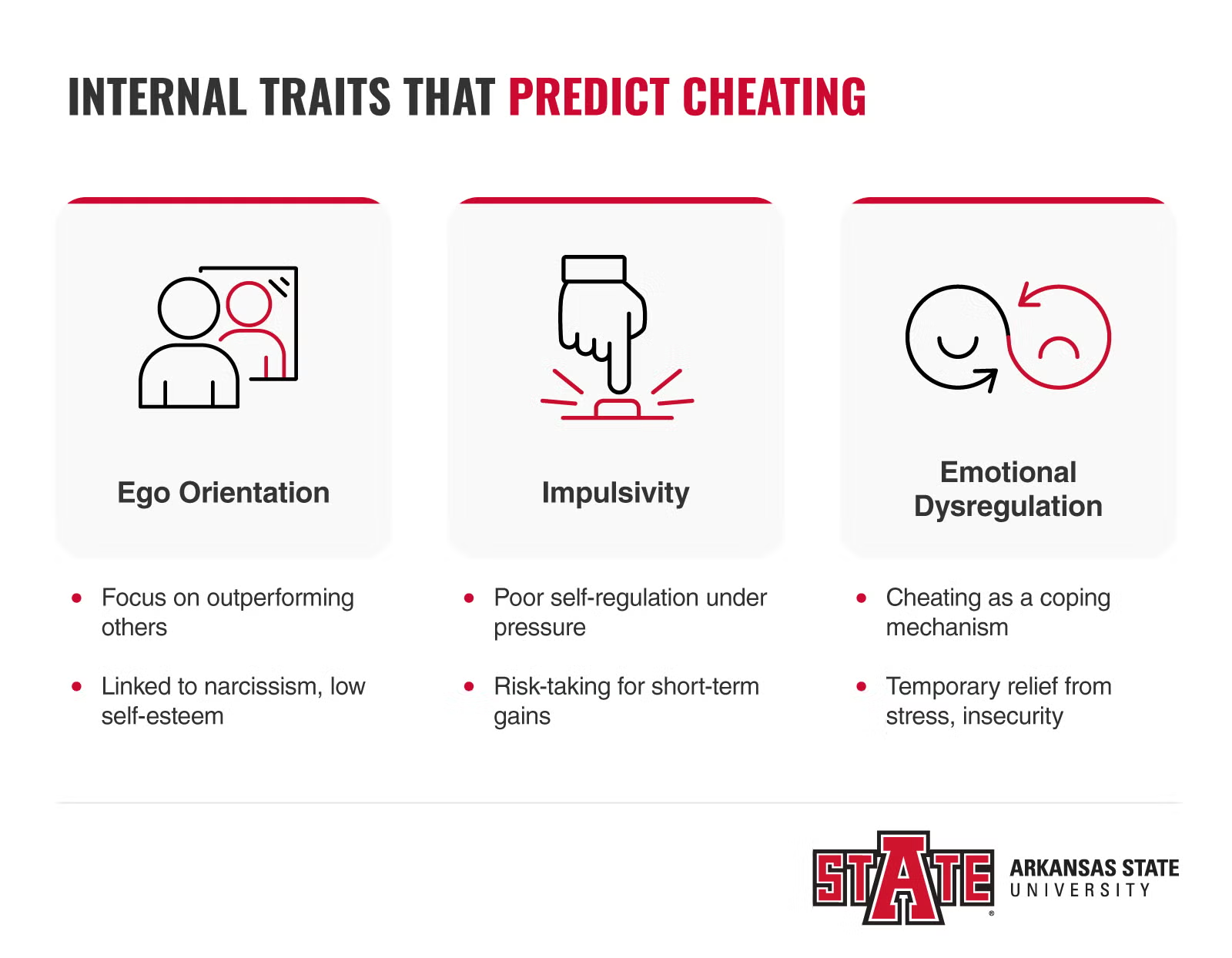
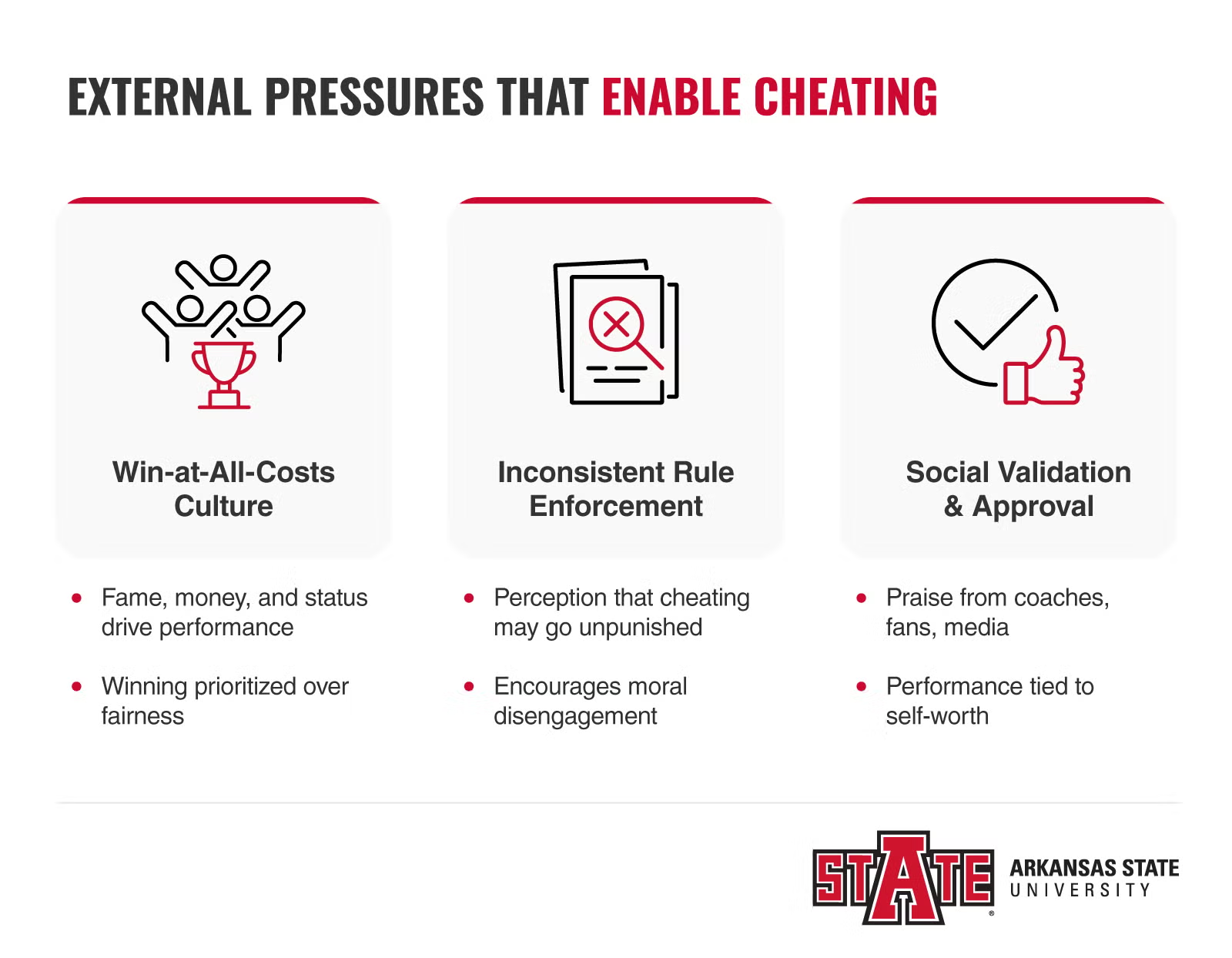
Cheating in sports rarely occurs in isolation. Psychological research reveals that internal traits, like impulse control or ego orientation, as well as external pressures, such as win-at-all-costs cultures or inconsistent rule enforcement, can influence unethical behavior.
For sport administrators and team leaders, understanding these drivers is essential to building ethical organizations. Recognizing how emotional, cognitive, and cultural factors shape athlete behavior enables administrators to design policies, training programs, and leadership strategies that reinforce accountability and reduce the likelihood of misconduct.
The Competitive Culture and Pressure To Win
Athletes at all levels face immense pressure to perform, which can distort judgment and cause them to rationalize unethical choices. In elite sports, the difference between winning and losing often translates into millions of dollars, global fame or the loss of an entire career.
According to a Psychology Today article, “the win-at-all-costs mentality” reinforces cheating as a coping mechanism, particularly when athletes feel their careers or reputations are at stake. A 2022 World Anti-Doping Agency report found nearly 1,600 anti-doping rule violations globally, a stark reminder that cheating remains a global concern.
Ego Orientation and Low Moral Functioning
Psychological traits play a crucial role in determining who is more likely to cheat. Athletes with ego-oriented achievement goals, focused on outperforming others and proving innate ability, are more prone to ethical lapses than task-oriented athletes, who focus on self-improvement and effort. This orientation is often linked to narcissism, low self-esteem and a fragile sense of self-worth, all of which can create a dependency on external validation like praise, rankings or media attention.
Research in Attitudes and Social Cognition shows that the notion that cheaters feel guilty after engaging in unethical behavior simply isn’t true. In over six experiments, unethical behaviors not only failed to trigger negative affect but also triggered positive affect. Such behaviors can lead to a “cheater’s high.”
This is particularly concerning when such athletes also show signs of impulse control problems, are narcissistic or have other personality disorders, which limit their ability to evaluate consequences rationally. In the long run, these patterns can erode romantic relationships, team cohesion and future career prospects, as the fallout from public cheating scandals often extends far beyond the playing field.

Why Athletes Cheat: Key Psychological Predictors
Beyond cultural norms and personality traits, psychological predictors help explain why cheating occurs, even when athletes understand the risks. Cheating behavior is often the result of compromised decision-making, rooted in impulse, emotional need or personal insecurity.
When stakes are high and internal pressures mount, short-term thinking can override ethical standards. The following psychological drivers offer insight into how and why athletes make choices that jeopardize their careers, reputations and relationships.
Impulsivity and Poor Impulse Control
Impulsivity is a common predictor of cheating, especially when athletes prioritize immediate rewards over long-term consequences. Research shows that individuals with impulsive traits are more likely to engage in risk-taking behaviors, particularly when faced with threats to performance, reputation or self-image.
Poor impulse control can lead to split-second decisions that feel justified in the heat of competition, like using a banned substance to recover faster or cutting corners during training. In high-pressure environments, the brain’s reward system can be hijacked by short-term gains, releasing dopamine that reinforces the behavior. Another common reason athletes cite for unethical choices is the belief that they’re underperforming despite great effort, prompting them to seek shortcuts or external validation through winning.
Unmet Needs and Emotional Motivations
Cheating isn’t just about winning. It can also reflect deeper emotional needs. Some athletes cheat to fulfill a longing for validation, emotional connection or a sense of self-worth they don’t find through performance alone. These unmet needs can stem from low self-esteem, insecurity or unresolved personal issues, creating a psychological vulnerability that cheating temporarily soothes.
Attachment styles may also explain why athletes cheat. Those with insecure attachment tendencies may be more likely to violate rules to gain approval or preserve status, especially if they view success as the only source of value in their lives. Athletes struggling with unmet emotional needs may exhibit unethical behavior as a coping mechanism: one that ultimately damages their current relationships, future opportunities and mental health.
Whether it’s the desire for approval from coaches or fans, or the attempt to repair a fractured self-image, emotional drivers are often underestimated in sports psychology. Yet these motivators can be just as powerful as external rewards in influencing behavior.
The Role of Sports Organizations in Reducing Cheating
While an athlete’s mindset may explain individual choices, the broader culture and structure of sports organizations often determine whether unethical behavior takes root. From league offices to athletic departments, leadership sets the tone for what behaviors are tolerated, rewarded or penalized:
- Strong governance and ethical leadership are essential to minimizing cheating: When sport administrators implement clear policies, enforce rules consistently and foster a culture of accountability, they help deter misconduct. Athletes are less likely to bend the rules when they see fairness, transparency and consequences as part of the organizational DNA.
- Proactive education also plays a vital role: Organizations that prioritize training around ethics, compliance and decision-making, especially when embedded into onboarding, leadership development and team culture, set stronger expectations. Leadership at every level, from athletic directors to team captains, can reinforce these values through consistent messaging and behavior modeling.
- Incentive structures also matter: Success measured solely by winning records or revenue can encourage unethical shortcuts. However, when institutions recognize qualities like integrity, leadership under pressure and resilience, they redefine what success looks like in athletics.
Arkansas State University’s online M.S. in Sport Administration degree prepares graduates to shape these organizational cultures. Through coursework in governance, leadership, and legal and ethical issues in sports, students gain the tools to lead with integrity, building programs that prioritize performance and principles across professional, collegiate and amateur athletics.
Case Studies and Famous Examples
Cheating in sports is often a reflection of deeper psychological patterns and environmental pressures, as opposed to a drive to break the rules. These real-world cases reveal how motivations like ego, validation, financial gain and organizational culture intersect with ethical decision-making. Below are key examples, each offering a distinct lens into the psychology of cheating.
NBA Gambling Scandal: Identity, Trust and the Lure of Financial Manipulation
The recent scandal involving NBA player Jontay Porter and the alleged misuse of insider injury information for betting outcomes sheds light on how high-stakes environments can erode ethical boundaries. While players like Chauncey Billups and Terry Rozier were reportedly unaware their names were involved, the incident exposes how financial incentives, blurred relationships and psychological rationalizations create a fertile ground for cheating.
This case underscores the convergence of athlete vulnerability, external pressures and the perceived normalization of gambling in modern sports culture. It reflects how decision-making can be distorted when personal gain is prioritized over trust and when league systems may not fully account for emerging ethical threats.
Lance Armstrong: Doping as a Systemic Strategy
Armstrong’s long-term use of performance-enhancing drugs wasn’t a one-time lapse. It was part of a calculated system built to dominate professional cycling. His case illustrates how sustained ethical disengagement, reward-driven rationalization and high personal stakes can normalize cheating, even among celebrated athletes.
Deflategate: Competitive Edge Through Control
The controversy surrounding Tom Brady and deflated footballs during the 2014-15 NFL playoffs highlights how minor manipulations can reflect major psychological drivers. In high-pressure environments, even slight advantages may feel justified under a “win-at-all-costs” mentality. It also shows how cheating can exist in gray areas of plausibility and deniability.
Black Sox Scandal: Resentment and Financial Disparity
The 1919 scandal, in which eight Chicago White Sox players were accused of throwing the World Series for bribes, reflects the role of workplace dissatisfaction and unequal compensation. Psychological drivers included groupthink, mistrust of leadership and perceived injustice, all of which contributed to compromised decision-making.
Across these cases, cheating is rarely impulsive or isolated. It often stems from a mix of systemic pressure, psychological rationalization and cultural norms that reward results over integrity. Studying these examples helps illuminate how sports organizations, coaches and psychologists can intervene before ethical lines are crossed.
How Arkansas State University Prepares You to Address Cheating Through Sport Administration
Understanding the psychology of cheating requires more than intuition; it demands a structured approach to leadership, ethics and behavior in athletic environments. Arkansas State University’s M.S. in Sport Administration online degree offers that foundation, equipping students to examine how motivation, pressure and organizational culture influence ethical decision-making in sports. Program highlights include:
- Ethics and governance-focused curriculum: Students explore key issues such as sports law, organizational leadership and ethical decision-making, preparing them to manage compliance, enforce policies and build cultures of integrity across athletic organizations.
- Behavioral and motivational insights: Courses in communication, leadership, and sport management help students understand how individual behavior aligns or conflicts with organizational values and performance goals.
- Real-world experience: A-State’s internship or capstone project requirement allows students to apply academic concepts to professional sport settings, gaining practical skills in managing teams, programs and ethical challenges.
- Career-focused outcomes: Graduates are well-prepared for roles such as athletic director, compliance officer, league administrator or operations manager, positions where ethical leadership and behavioral insight are essential.
This flexible, 100% online program empowers students to lead in environments where ethical behavior is critical to organizational success. By analyzing the psychological drivers of cheating and connecting them to administrative practices, A-State graduates are positioned to make a lasting impact in sport leadership roles.
Careers That Address Cheating Through Sport Administration and Leadership
Studying the psychology of cheating leads to career paths focused on ethics, leadership and organizational culture in sports. Professionals in these roles apply behavioral insights to improve athlete conduct, enforce compliance and shape environments where integrity is non-negotiable. Here are several career paths where an understanding of cheating psychology is highly valuable:
- Athletic director: Oversees all aspects of athletic programs, including ethical policy development, compliance enforcement and staff training, making leadership on issues like cheating and sportsmanship central to the role.
- Compliance officer: Monitors adherence to rules and investigates potential violations within athletic organizations, often requiring a strong grasp of psychological motivators behind unethical behavior.
- Team or league administrator: Helps shape the cultural and structural systems that govern athlete behavior, including codes of conduct, training programs and policy communication.
- Sports operations manager: Manages logistics and internal workflows, often creating systems that support accountability, fair play and ethical team dynamics.
- Academic advisor or student-athlete development coordinator: Works closely with student-athletes on behavior, decision-making and values, especially in high-pressure environments where ethical shortcuts are tempting.
Arkansas State University’s online M.S. in Sport Administration degree provides the behavioral, ethical and strategic tools needed to excel in these roles. Through coursework in leadership, governance, communication and legal issues in sports, students gain a well-rounded understanding of how to manage both performance and principles in athletic organizations.
FAQs About the Psychology of Cheating in Sports

Cheating in athletics is a complex issue that involves psychological, emotional and social drivers. Researchers continue to explore what motivates unethical behavior in sports and how interventions can reduce it. Below are answers to frequently asked questions that shed light on the psychology behind cheating, personality traits linked to this behavior and how it can be addressed in both academic and real-world settings.
Why Do Athletes Cheat?
Athletes often cheat due to intense pressure to win, distorting their moral compass and making short-term rewards seem more important than long-term consequences. Cheating may also stem from unmet emotional needs, impulsiveness or a belief that “everyone else is doing it.” The higher the stakes — financial or reputational — the more likely some athletes are to rationalize unethical choices.
What Personality Traits Predict Cheating?
Traits commonly linked to cheating include narcissism, low self-esteem, impulsiveness and a high ego orientation. Athletes with these traits may prioritize external validation over internal values, making them more susceptible to behaviors like doping or rule-breaking.
Can Cheating Behavior Be Changed?
Yes, cheating behavior can be influenced through behavioral interventions, accountability structures and mental health support. Programs focusing on self-regulation, ethical reasoning and team-based values have shown promise in reducing cheating, especially when athletes feel supported and emotionally connected to their team and coaches.
Understanding and Addressing Cheating Behavior
Cheating in sports is rarely the result of a single bad choice. It’s more often the product of psychological factors, like impulse control, moral disengagement and unmet emotional needs, interacting with high-pressure environments. By studying these drivers through a sport administration lens, you can identify meaningful ways to foster ethical cultures in athletics.
A-State’s online M.S. in Sport Administration program gives students the tools to do exactly that. With coursework in motivation, behavior change and sports ethics, along with access to experienced faculty and internship opportunities, A-State equips future leaders to navigate the complex ethical landscape of modern athletics. Graduates leave prepared not just to manage programs but also to shape them with integrity and purpose.