


Artificial intelligence has quickly become part of classrooms across the country, supporting everything from homework help to group projects. However, as students lean on these tools more often, questions have emerged about whether safeguards are strong enough to protect their well-being. To better understand this issue, a questionnaire of 760 K-12 educators was conducted on behalf of Arkansas State University (A-State).
The questionnaire was designed to learn how teachers are responding to the rise of AI in the classroom. Educators shared where they see risks and how prepared they feel to guide students in using these tools responsibly. Their perspectives shed light on the promise and the challenges of integrating AI into everyday learning.
Key Takeaways
- Nearly half of K-12 educators believe current AI safeguards intended to protect students are insufficient.
- One in four K-12 educators have observed students using AI for emotional support or personal advice.
- Nearly two in five K-12 educators (39%) do not feel prepared to guide students in using AI tools responsibly.
- 24% of K-12 educators have witnessed a student confide in an AI tool instead of a teacher, counselor or peer.
- Two in five K-12 educators (41%) view AI’s role in education negatively, compared to 30% who see it positively and 29% who are neutral.
Educators’ Concerns About Student AI Use
AI is changing the way students learn and interact, but teachers are raising concerns about the risks tied to these tools. Educators emphasized the need for stronger guardrails to protect students academically and emotionally.
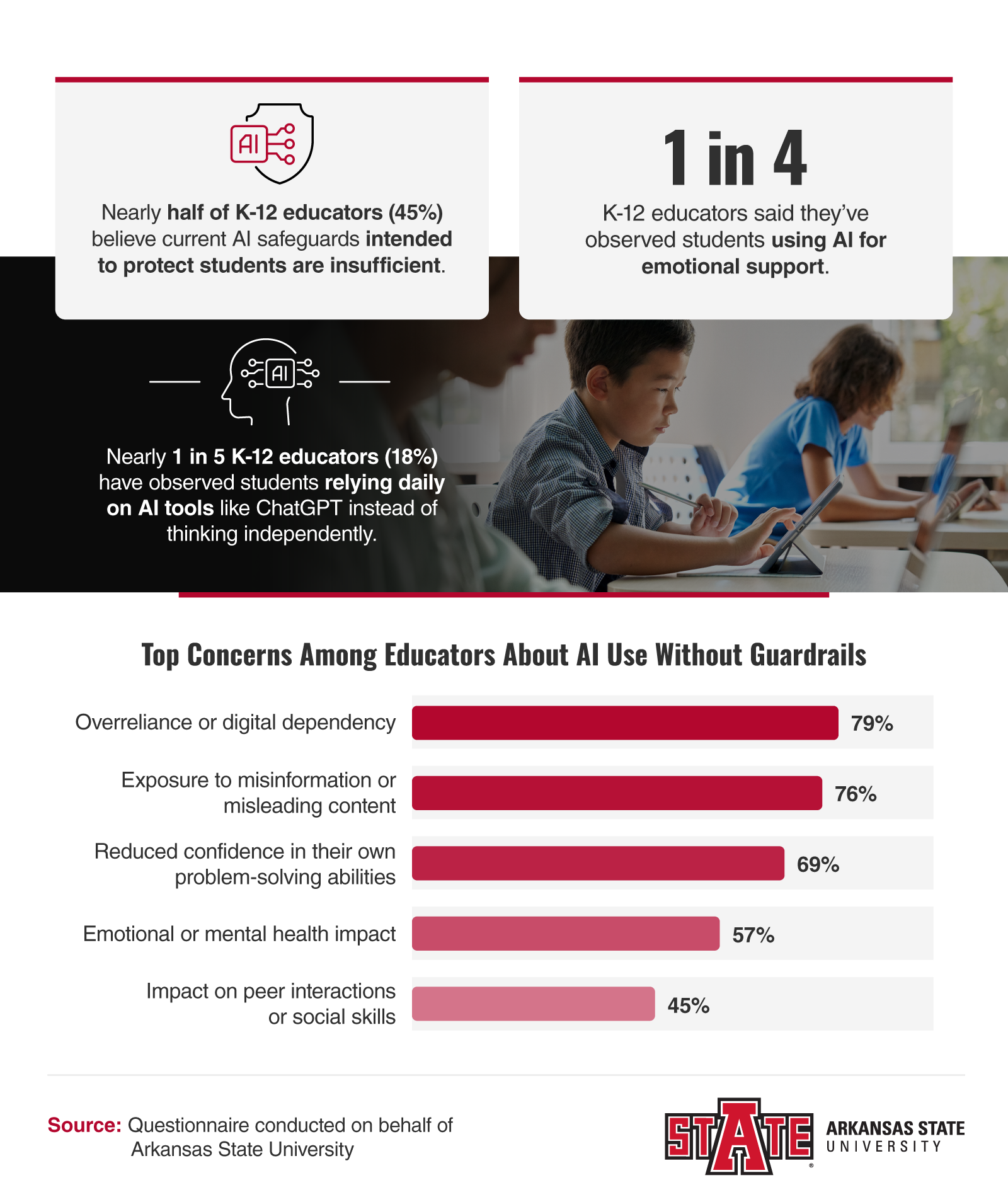
Nearly half of educators (45%) stated that current AI safeguards are insufficient to protect students, and 44% reported that AI malfunctions or misleading outputs have harmed learning outcomes, including comprehension, grades and assignment quality. One in four teachers also observed students using AI for emotional support or personal advice, indicating a growing reliance on these tools beyond academic tasks.
Educators also identified top concerns related to students using AI without safeguards. Seventy-nine percent pointed to digital dependency, 76% cited exposure to misinformation and 69% expressed concern about reduced confidence in their problem-solving abilities. More than half also flagged potential mental health impacts (57%) and negative effects on peer interactions (45%).
How Student AI Use Has Affected the Classroom
Teachers reported that AI is changing student behavior in noticeable ways. According to the questionnaire, 61% of educators saw adverse effects on student focus and attention span. More than half (58%) reported that students’ academic confidence has declined, while 53% noted a reduction in motivation.
Teachers also observed decreased collaboration among peers (54%) and a decline in creativity (65%). These findings suggest that while AI may support productivity, it may also discourage students from developing core learning skills.
Educators’ AI Readiness and Classroom Realities
Even as AI becomes more common in classrooms, many teachers do not feel equipped to guide students in its use.
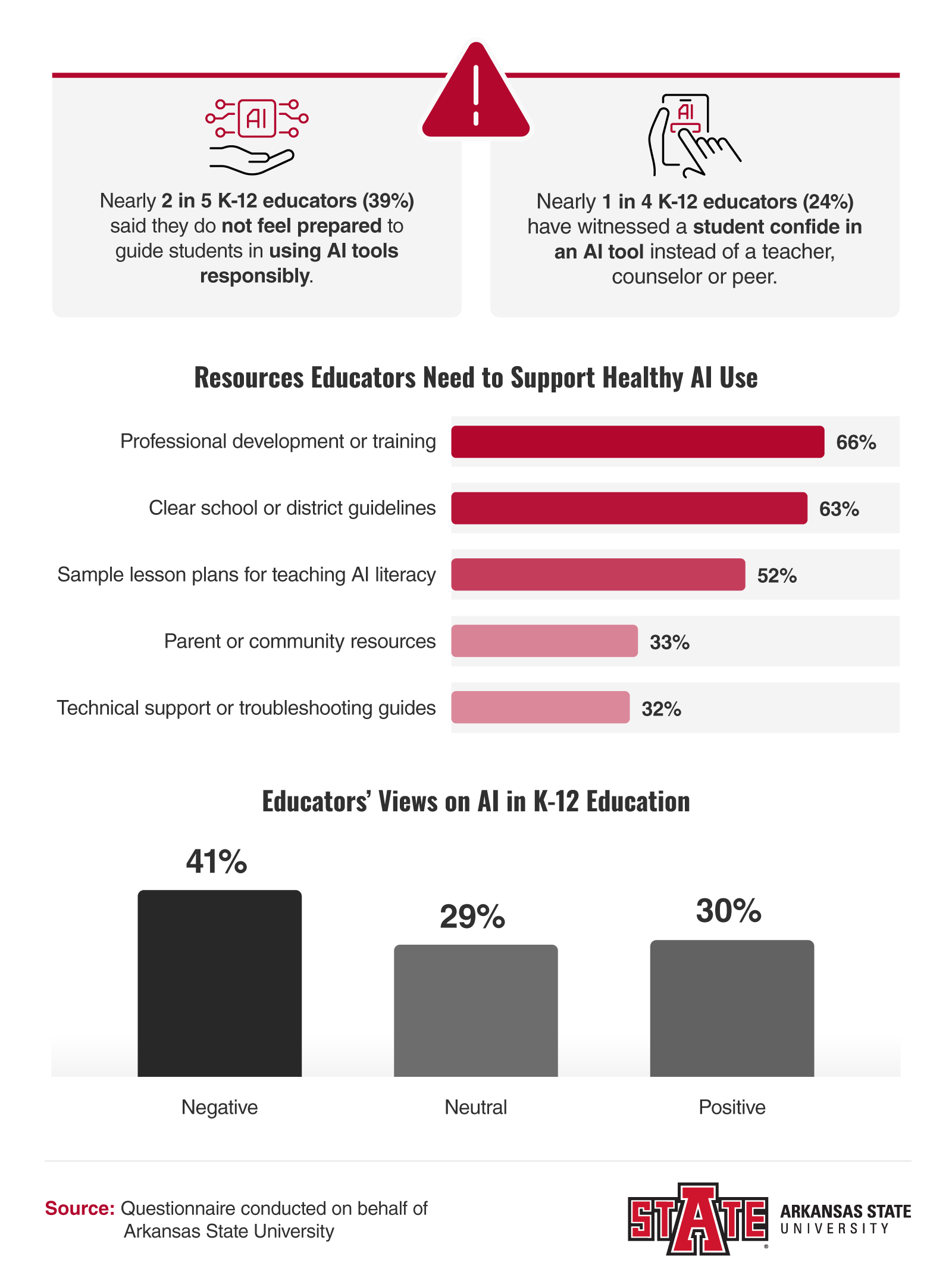
Nearly two in five educators (39%) admitted they are not prepared to teach responsible AI use. Additionally, 24% reported witnessing students confiding in an AI tool instead of seeking support from a teacher, counselor or peer.
Nearly half of teachers (47%) were also unaware that new mental health guardrails had been added to the popular AI tool ChatGPT, pointing to a gap between evolving technology features and educator awareness. When asked about safeguards, 69% of educators believed AI tools should notify an adult if a student expressed signs of emotional distress.
Teachers also shared what resources they needed most. Sixty-six percent pointed to professional development or training, while 63% wanted clearer school or district guidelines. Others sought sample lesson plans for AI literacy (52%), as well as parent and community resources (33%).
Teachers often had to intervene when AI tools provided misleading or incorrect guidance. The study found that 72% of educators had intervened after students received inaccurate AI outputs. The most common consequences were student confusion or frustration (44%), classroom management challenges (37%) and increased teacher workload (36%).
Some also reported reduced trust in AI (28%) and missed assignment deadlines (11%). These interventions highlight the challenges teachers face in balancing the integration of technology with reliable learning outcomes. Overall, 41% of teachers viewed AI’s role in education negatively, compared to 30% who saw it positively and 29% who were neutral.
Preparing Teachers for the Next Chapter of AI in Education
The findings from this questionnaire reveal that while AI tools are becoming a daily presence in classrooms, many educators still feel unprepared to manage their influence. Teachers recognize the potential benefits of AI but remain cautious about its impact on student confidence, focus and emotional well-being.
Moving forward, schools can help bridge these gaps by providing ongoing professional development, establishing clear usage guidelines and encouraging open communication between educators, students and parents. With the right support and awareness, teachers can turn AI from a classroom challenge into a meaningful tool for learning and growth.
Methodology
A questionnaire of 760 K-12 educators was conducted on behalf of A-State to explore how K-12 educators perceive ChatGPT’s new mental health safeguards and evaluate whether AI’s growing role in the classroom supports or undermines their students’ well-being, academic confidence and healthy tech habits.
Respondents were sourced using CloudResearch Connect. The average age of respondents was 42; 73% were women, 26% were men and 1% were nonbinary. This nonscientific, exploratory study on educators’ opinions is not meant to represent all K-12 teachers.
About Arkansas State University
Arkansas State University offers flexible, fully online degree programs designed for today’s working professionals. Students can pursue programs such as the online Bachelor of Science in Education (B.S.E.) in Elementary Education, gaining the knowledge and skills to support academic achievement in diverse learning environments. A-State combines academic excellence with convenience, making it possible for educators and other professionals to advance their careers while balancing work and family commitments.
Fair Use Statement
The information in this article is provided for educational and noncommercial use only. If you choose to share it, please include a link back to Arkansas State University with proper attribution.