


Artificial intelligence has moved from an emerging tool to a defining force in the tech workforce, affecting how roles are designed and how careers are built. In 2025, rapid advances in automation and generative AI intensified conversations about job stability, skill relevance and long-term career resilience. For students and working professionals alike, decisions about education, specialization and upskilling increasingly reflected concerns about how AI might redefine traditional tech roles.
To better understand these shifts, a national questionnaire was conducted on behalf of Arkansas State University (A-State) among 302 U.S.-based tech professionals. This research aimed to explore how workers perceived AI’s influence on job security, confidence and readiness to adapt.
Key Takeaways
- More than one in 10 tech workers (13%) believe their job won’t exist within 10 years.
- 46% of tech workers are concerned about AI’s long-term impact on the tech workforce.
- Gen Z is the least optimistic about AI: 62% are concerned about the long-term impact, and only 29% believe it will have a positive long-term impact.
- 81% of tech workers are confident in their ability to adapt to AI-driven changes.
Career Uncertainty Is Reshaping Tech Decision-Making
Artificial intelligence is influencing not just how technical work gets done but also how professionals think about the future of their careers. Shifting automation capabilities are prompting many tech workers to reconsider which tasks, roles and skills are most likely to endure.
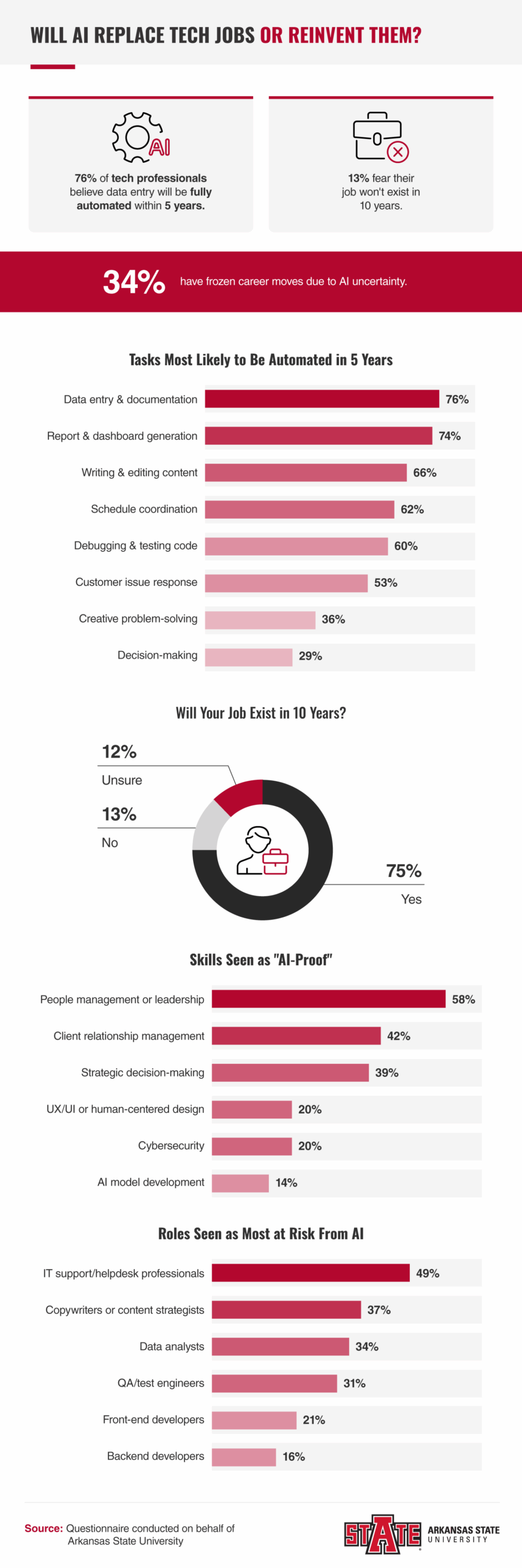
A majority of respondents believed their role would continue to exist over the next decade, yet uncertainty persisted. While 75% expected their job to remain viable in 10 years, 13% believed it would not, signaling concern within the workforce. That uncertainty appeared to affect mobility, with 34% delaying career moves such as switching roles or employers due to AI-related questions about the future.
Generational differences were apparent. Gen Z showed the highest level of hesitation, with 38% delaying job changes because of AI uncertainty, more than any other age group. For younger professionals still establishing their careers, automation concerns appeared to weigh heavily on long-term planning.
Automation expectations also shaped perceptions of role durability. Tasks tied to data entry and documentation were viewed as most vulnerable, with 76% believing these responsibilities would be fully automated within five years. Report and dashboard generation followed closely (74%), reinforcing the idea that routine technical work faced the greatest disruption.
Learning AI Skills Without a Clear Roadmap
As AI tools multiplied across the workplace, tech professionals reported mixed experiences with training and support. Many were expected to adapt quickly, often without structured guidance from employers.
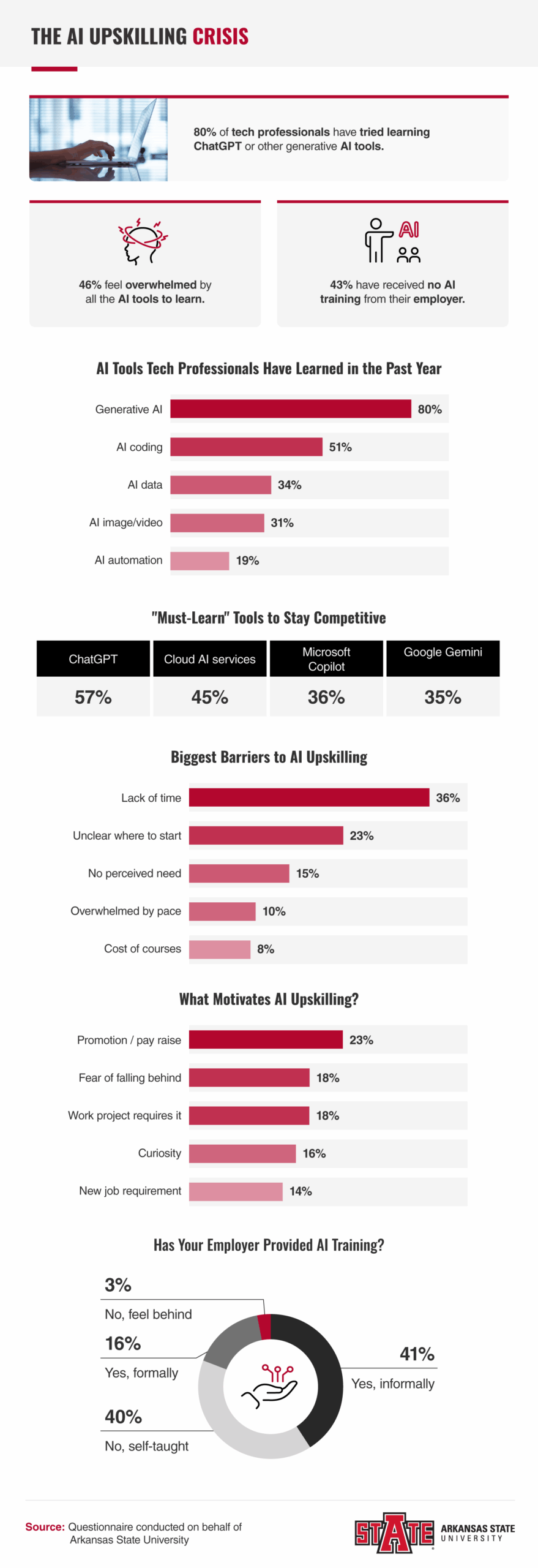
Nearly half of respondents (46%) said they felt overwhelmed by the number of AI tools they were expected to learn, with Gen Z most likely to report this feeling (52%). The challenge was compounded by limited organizational support, as 43% received no formal AI training from their employer and instead relied on independent learning.
Preferences for upskilling reflected a desire for practical application. On-the-job training was the most effective learning method for 41% of respondents. Another 22% preferred self-directed options such as YouTube, Reddit or open-source resources.
Confidence and Concern Coexist Across the Tech Workforce
Despite widespread concern about AI’s long-term effects, many tech professionals still believed they could adapt. Confidence levels, however, varied by generation, role and gender.
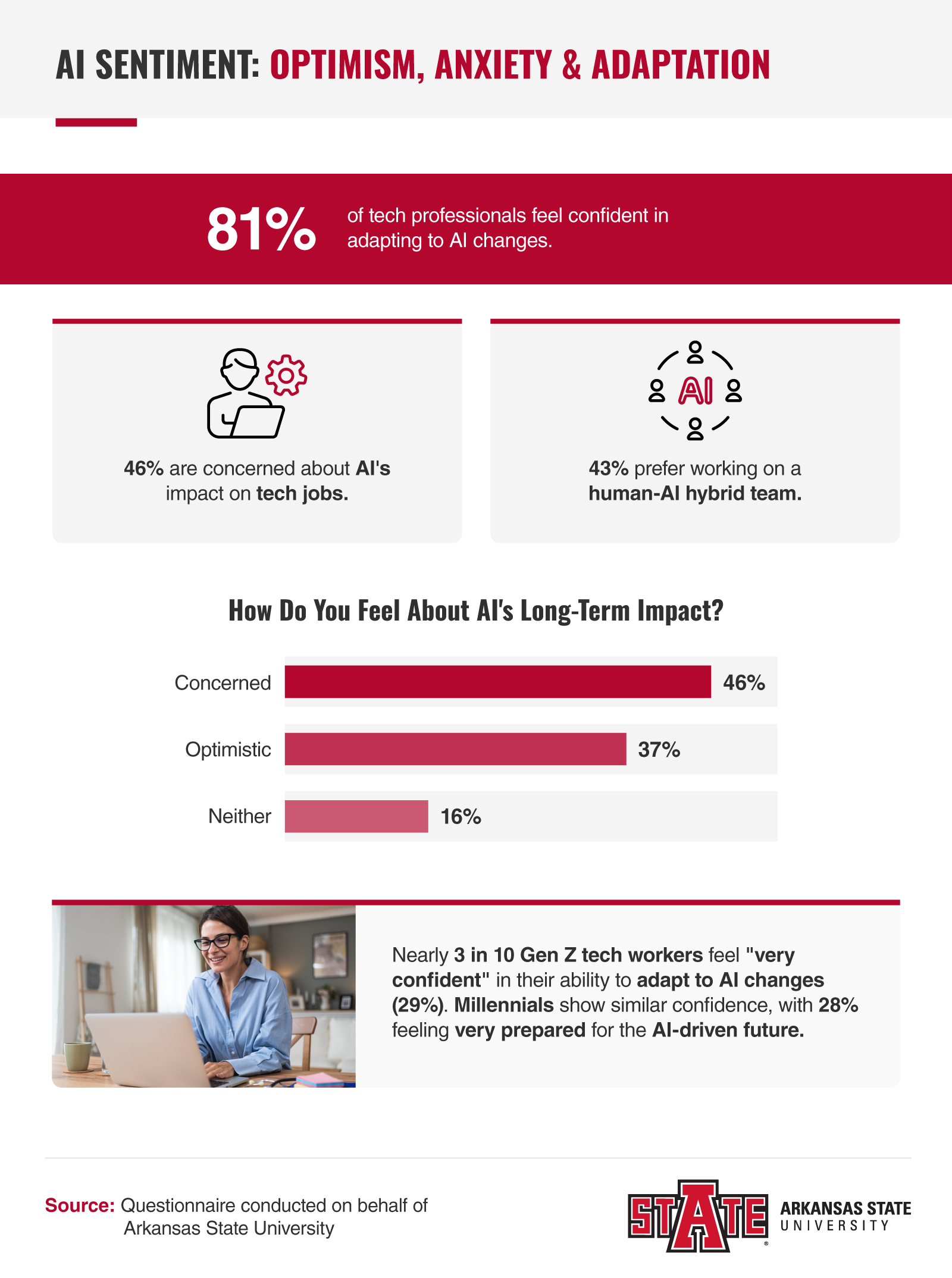
Overall, 46% of tech workers were concerned about AI’s long-term impact on the workforce, with Gen Z again standing out as the least optimistic. Among this group, 62% expressed concern, and only 29% believed AI would have a positive long-term impact. Role-based differences also emerged, as 59% of data analysts were concerned, compared to 42% of software engineers and IT administrators.
At the same time, adaptability remained a point of strength. While 81% felt confident in their ability to adjust to AI-driven changes, only 28% described themselves as very confident. Confidence gaps were especially visible across gender lines. About 33% of men reported feeling very confident in their ability to adapt, compared with only 20% of women.
Navigating AI Change With Confidence and Caution
As these findings showed, artificial intelligence is introducing real uncertainty into the tech workforce, but it is also reinforcing the value of adaptability and continuous learning. Many professionals recognized that while some tasks may change or disappear, core technical knowledge, problem-solving and human-centered skills remain essential.
For those working in tech or considering a tech education, the data suggests that staying engaged with new tools and strengthening foundational skills can support long-term career resilience. With the right preparation, AI is more likely to reshape tech careers than replace them outright.
Methodology
A questionnaire of 302 tech professionals across the United States was conducted on behalf of Arkansas State University in January 2025. The research examined perceptions of AI’s impact on job security, confidence in adapting to AI-driven changes and experiences with AI upskilling. Respondents represented a range of roles, including IT and systems administrators (27%), software developers and engineers (25%), data analysts and scientists (15%), product managers (7%), UX and UI designers (2%) and other tech positions (13%). An additional 9% were not currently employed or were working outside of tech.
The demographic breakdown included 64% male, 33% female and 3% nonbinary respondents. By generation, participants identified as millennials (54%), Gen Z (24%), Gen X (18%) and baby boomers (4%). This mix provided insight into how AI concerns and confidence varied across career stages and backgrounds. The findings reflect self-reported perceptions from a convenience sample and may not represent all tech professionals. Regional distribution, company size and specific industry sectors within tech were not controlled for in the analysis.
About Arkansas State University
Arkansas State University offers flexible, fully online programs designed for working professionals seeking to advance their careers in technology and related fields. One such option is the online Master of Science in Applied Digital Technology – Business Analytics program, which emphasizes data analytics, business intelligence and strategic decision-making through technology. The program aligns with the growing need for professionals who can leverage emerging technologies and data-driven insights to solve complex business challenges. With an online format, students can build in-demand analytics skills while balancing work and personal commitments.
Fair Use Statement
The information in this article may be used for noncommercial purposes only. If shared or referenced, proper attribution and a link back to Arkansas State University must be included.